Capability labels are too broad
A 'shipyard' label does not prove travel-lift capacity, crane capability, dry-dock dimensions or suitability for a specific yacht.
YACHT REFIT AND SERVICE INTELLIGENCE
MaritimIQ helps technical businesses understand the harbour environment around a yacht project. Vessel access, yard equipment, fuel, power, waste, nearby contractors and seasonal context can be evaluated together without turning a directory listing into proof of capability.
Qualify whether a yacht can reach the relevant harbour or yard context.
Map recorded refit capability and service gaps across cruising regions.
Integrate service intelligence into sales, dispatch and project-planning systems.
WHY THIS ROLE NEEDS IT
Describe, compare and plan the physical and service environment that yachts depend on.
A 'shipyard' label does not prove travel-lift capacity, crane capability, dry-dock dimensions or suitability for a specific yacht.
Approach constraints, utilities, waste reception, suppliers and customs context can affect the feasibility of the technical work.
Refit work is often privately contracted, so missing public evidence must not be replaced by assumptions about demand or capability.
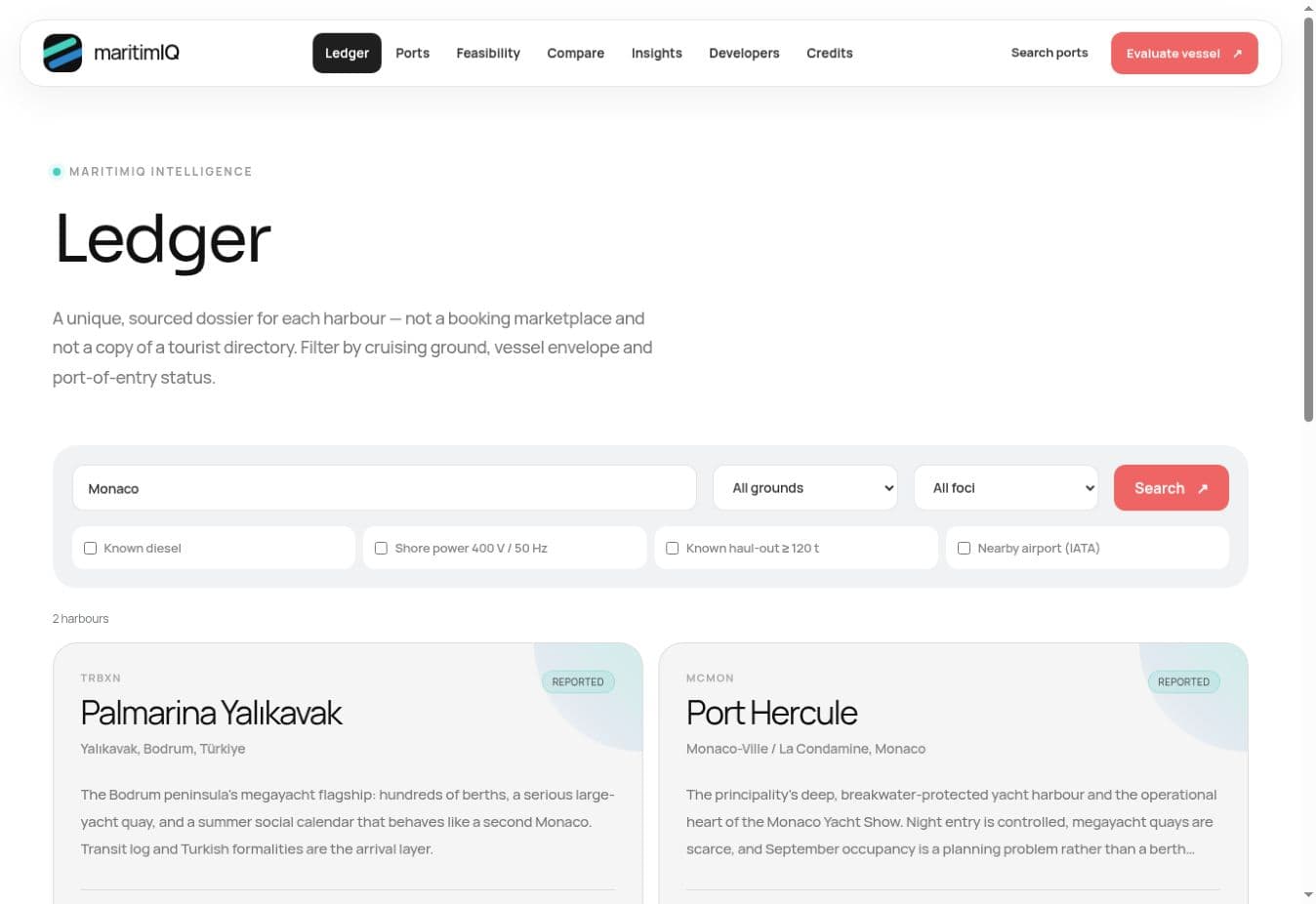
Searchable harbour ledger
Search the operating geography first, then inspect the evidence behind each technical capability.
ROLE-SPECIFIC FEATURES
Inspect travel lifts, cranes, dry docks and yard notes with dimensions, evidence and UNKNOWN handling.
Compare yacht dimensions and technical needs with supported harbour and service facts.
Search harbours and nearby service candidates across cruising grounds while retaining origin labels.
Review shore power, fresh water, pump-out and waste streams as separate capabilities.
Use labelled observations and derived bands as planning signals, never as a claim of project demand or booking availability.
USE CASES
Check the proposed yacht and location before committing engineering time to a detailed quotation.
Identify harbours where visiting yachts may need specialist support, then validate the commercial opportunity locally.
Compare recorded regional capabilities to frame deeper demand, permitting and financial diligence.
COMMERCIAL API ACCESS
Feed refit, utility and service facts into CRM, quoting or dispatch systems. The API carries provenance and missing-data states so sales workflows can require confirmation where the evidence is incomplete.
/v1/harbors/:id/refitRetrieve yard and equipment facts for a harbour.
/v1/harbors/:id/utilitiesInspect power and water specifications.
/v1/service-matchMatch a project's technical requirements to recorded capability.
/v1/harbors/:id/alternativesFind other geographically relevant harbours for the vessel.
Bearer keys, plan-aware limits and explicit scopes apply. API output is decision support—not a navigational chart, safety approval or live berth reservation.
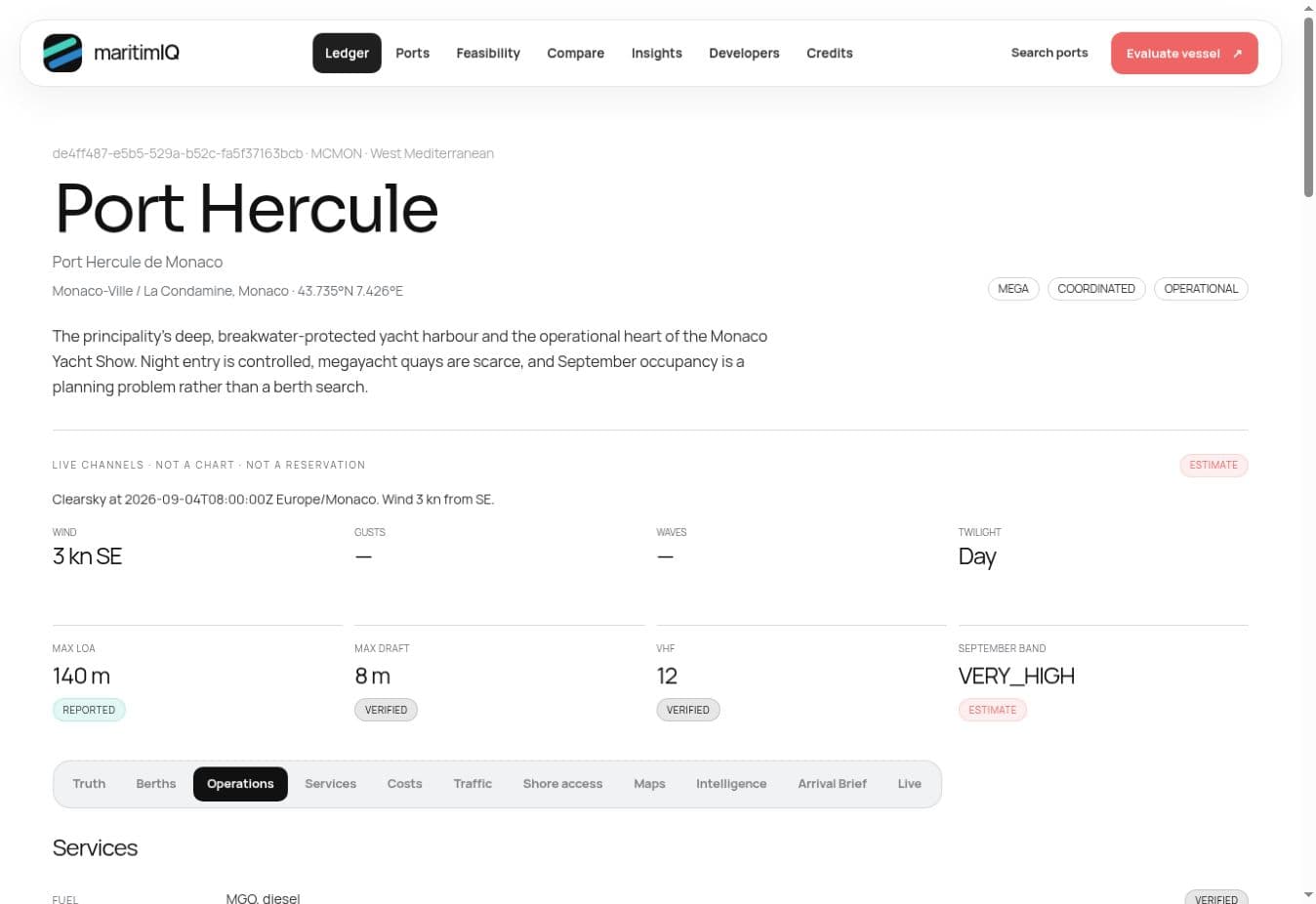
Port Hercule intelligence dossier
Harbour limits, service origin and operational context stay connected to the project location.
A PRACTICAL WORKFLOW
Check yacht access, harbour constraints and recorded facility specifications.
Confirm critical equipment, availability and project terms directly with the facility.
Use the evidence-backed result in quotation, logistics and resource scheduling.
TRUST MODEL
Decision-critical facts keep their source, observed date, confidence and conflict state.
Missing evidence is never quietly translated into no, zero, available or safe.
Accessible source material and permitted redistribution remain separate decisions.
QUESTIONS
No. Facility capability and current project availability are separate. Dates, scope, engineering acceptance and commercial terms require direct confirmation.
Commercial visibility can be separated from factual classification. Paid presence must never change evidence confidence or make a nearby provider an official harbour service.
Current traffic or seasonality context may support research, but the platform does not claim a complete historical demand model without sufficient observations.
RELATED SOLUTIONS