A beautiful itinerary may not fit the yacht
Draft, LOA, port-of-entry status, seasonal restrictions or local infrastructure can change whether a proposed call is realistic.
PORT INTELLIGENCE FOR YACHT CHARTER
MaritimIQ adds an operational harbour layer to charter planning. Brokers can compare embarkation ports, guest destinations and alternatives against the proposed yacht, then make clear which elements are sourced context and which still require confirmation by the captain, marina or agent.
Screen itinerary ports for the selected yacht before presenting them to a client.
Explain destination trade-offs with access, services, seasonal context and evidence quality.
Feed structured port intelligence into proposals, CRMs and itinerary tools through the API.
WHY THIS ROLE NEEDS IT
Build credible itineraries, coordinate shore-side work and answer client questions without confusing research with confirmation.
Draft, LOA, port-of-entry status, seasonal restrictions or local infrastructure can change whether a proposed call is realistic.
Directories and traffic signals do not prove a berth can be reserved for the charter dates.
Marketing language must not turn estimated transfers, partial tariffs or nearby services into guarantees.
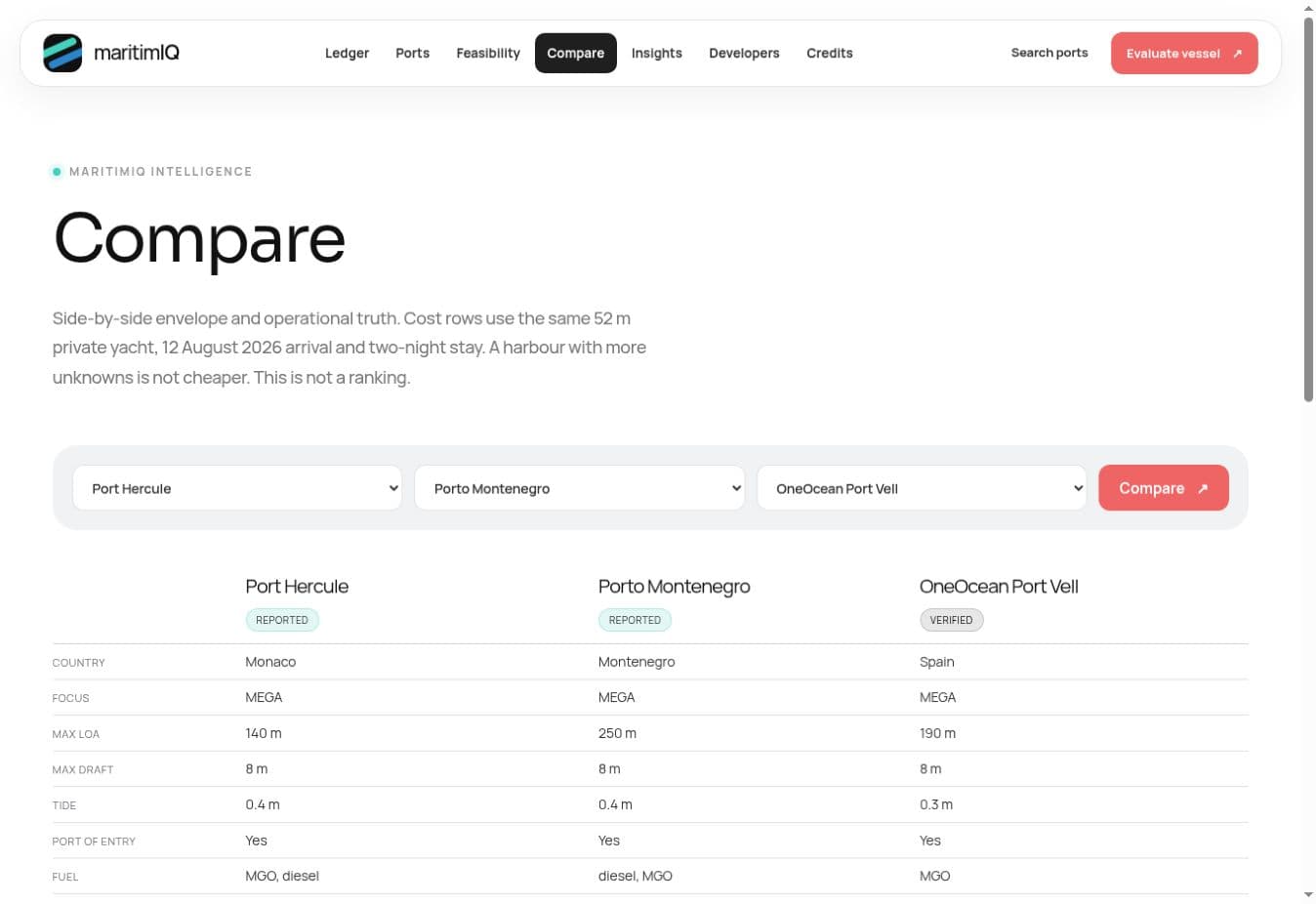
Side-by-side harbour comparison
Compare ports under one yacht and date assumption before turning the shortlist into client copy.
ROLE-SPECIFIC FEATURES
Apply vessel dimensions and commercial movement status before a harbour enters the client shortlist.
Compare multiple harbours under identical assumptions instead of relying on generic popularity rankings.
Find geographic alternatives and then rank them for an explicit yacht and mission when supported evidence exists.
Bring airports, transfers, medical access, amenities and events into the itinerary discussion with estimate labels intact.
Show what the model includes and which charge categories remain unknown before quoting the harbour portion of a trip.
USE CASES
Compare airports, yacht fit, formalities and guest access for two or three realistic start points.
Add concise, source-backed port cards to a proposal while keeping operational confirmation with the captain and central agent.
When a planned call becomes unattractive, identify nearby options and expose the new questions that must be confirmed.
COMMERCIAL API ACCESS
Embed harbour search, mission briefs and comparisons in a broker platform. Sandbox keys support integration testing, while production scopes, usage metering and licensing-aware serializers govern client-facing delivery.
/v1/missionGenerate a structured mission brief for yacht, destination and date.
/v1/compatibilityCheck the proposed yacht against each itinerary port.
/v1/harbors/:id/alternativesReturn vessel-aware alternative harbours.
/v1/cost-estimateCarry known and unknown port-cost components into planning.
Bearer keys, plan-aware limits and explicit scopes apply. API output is decision support—not a navigational chart, safety approval or live berth reservation.
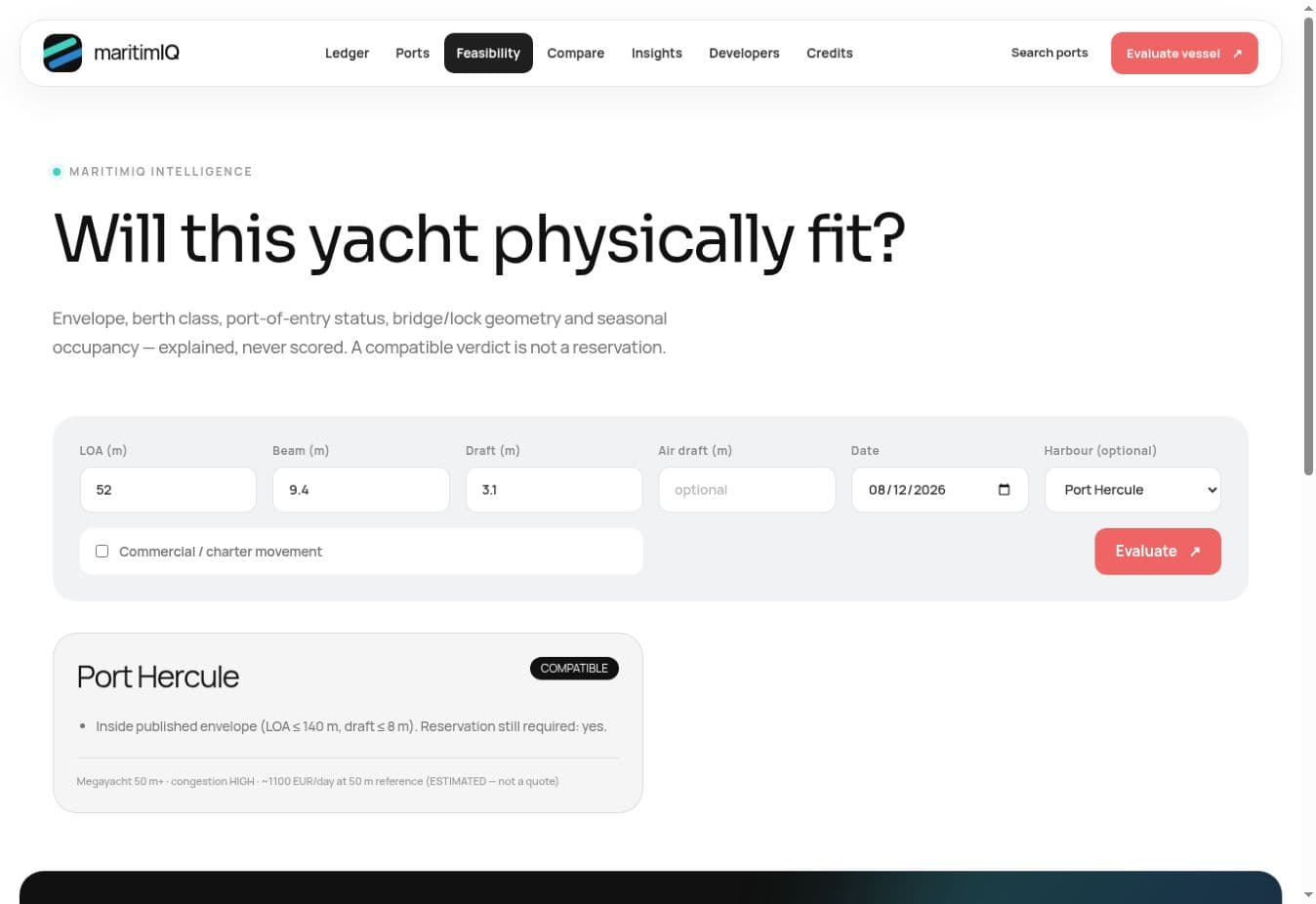
Vessel-to-harbour feasibility
A compatible envelope remains explicitly separate from a berth reservation or commercial confirmation.
A PRACTICAL WORKFLOW
Start with the actual yacht, charter dates and intended cruising pattern.
Add port fit, shore access, service and cost context to the creative itinerary.
Route operational questions and berth enquiries to the captain, agent and marina before contracting.
TRUST MODEL
Decision-critical facts keep their source, observed date, confidence and conflict state.
Missing evidence is never quietly translated into no, zero, available or safe.
Accessible source material and permitted redistribution remain separate decisions.
QUESTIONS
No. The platform never derives availability from AIS or declared capacity. Confirmed commercial availability must come from the marina, agent or an integrated booking partner.
Yes, subject to API plan and source-licensing permissions. Client copy should preserve estimates and avoid turning decision support into operational guarantees.
The platform supports vessel-to-harbour compatibility and mission-specific alternatives so dimensions and evidence coverage shape the shortlist.
RELATED SOLUTIONS